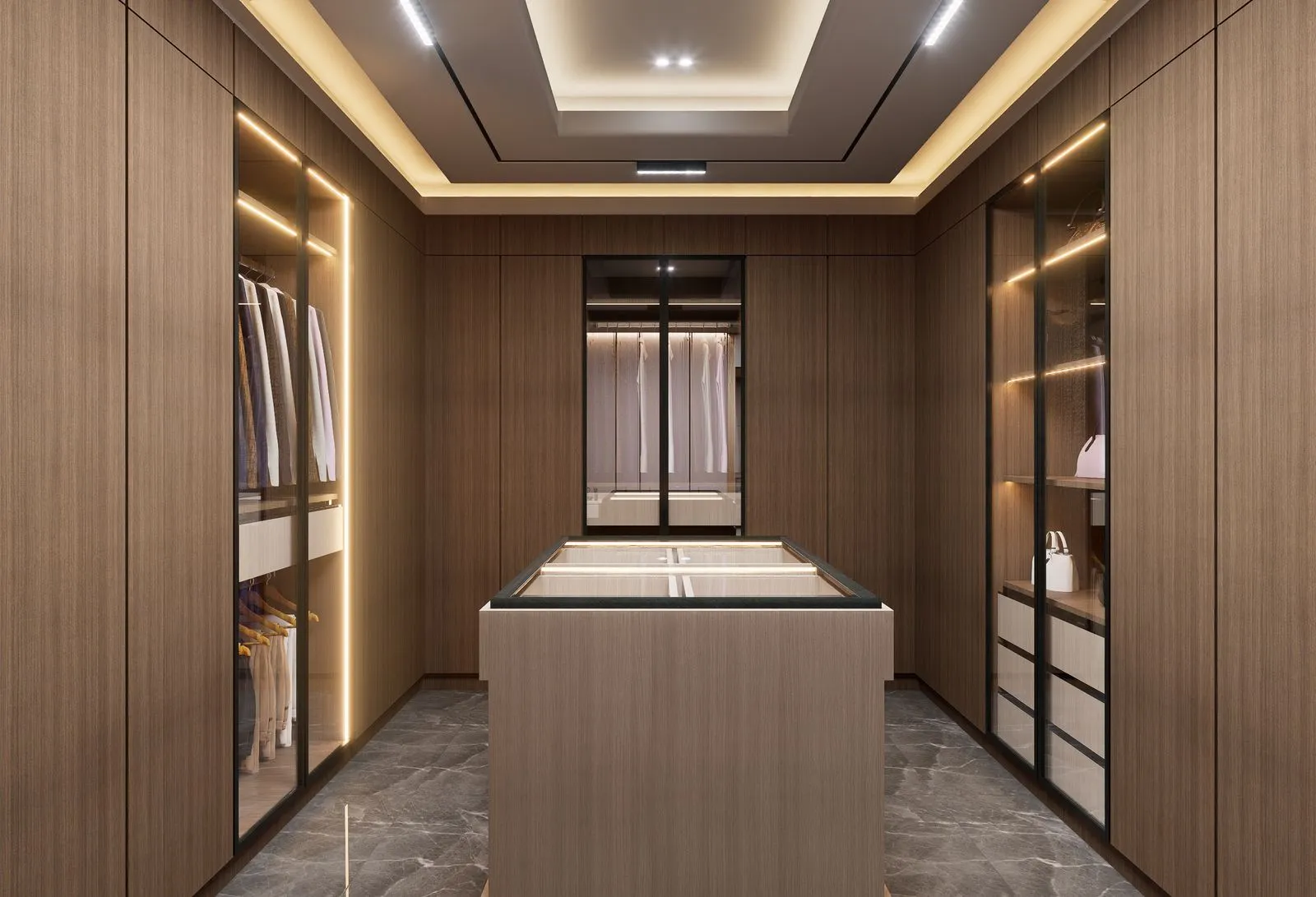
A walk-in closet can have plenty of storage and still be difficult to use if its corners are dim or clothing colors look different under the lights. Good lighting depends on more than choosing a bright fixture: placement, coverage, and color temperature all affect what you can see. Start by considering how you move through the space and where you choose outfits, then match the lighting plan to those everyday tasks.
Place Lights Around Your Routine
Begin with the ceiling, where a central fixture or several evenly spaced lights can provide general illumination. A single fixture may work in a compact closet, but a long or irregular layout can leave shelves and corners in shadow. Note the locations of hanging rods, drawers, shelves, and the mirror before deciding where lights should go.
Add task lighting where you handle specific jobs. Lights near a full-length mirror can help you check an outfit, while lighting inside cabinets or above drawers makes smaller items easier to find. Avoid placing a light directly behind where you stand; your body can block it and cast a shadow on the clothes or surfaces you are trying to see.
Check Coverage, Not Just Brightness
A fixture’s brightness matters, but so does how its light spreads. Look for gaps across the floor, upper shelves, and hanging clothes after the main lights are on. Multiple fixtures can distribute light more evenly than one bright central source, especially in a closet with deep shelves or a narrow passage.
Consider adjustable or directional fixtures for areas that need extra attention. Aim them toward clothing and storage rather than into your eyes or the mirror. If the closet has dark finishes, those surfaces may absorb more light; lighter walls and ceilings can help reflect it around the room. A lighting professional can assess the layout and recommend a practical arrangement.
Choose a Useful Color Temperature
Color temperature affects whether light appears warm, neutral, or cool. Very warm light can make a closet feel cozy, but it may shift how colors look when you compare clothing. Cooler light can feel crisp, yet an overly cool tone may seem stark in a small space. A neutral white is often a useful starting point for everyday dressing.
Try to keep the color temperature consistent across fixtures. Mixing noticeably warm and cool lights can make one part of the closet look different from another. If matching clothing colors is important, check how garments appear under the planned lighting and compare them with natural daylight when possible. Choose bulbs with good color rendering so shades remain easier to distinguish.
Plan for Safety and Convenience
Closet lighting should suit the fixtures, wiring, and clearances in the room. Keep lights away from stored items where heat or contact could create a hazard, and follow the fixture maker’s instructions and applicable electrical requirements. For new wiring or uncertain conditions, have a qualified electrician review the plan rather than improvising.
Think about how you will control the lights, too. A switch near the entrance is convenient, and motion-sensing controls can help when your hands are full. Dimmers offer flexibility if you use the closet at different times of day. Bright Nook installs closet lighting in Denver; compare your layout and lighting goals before choosing a setup.
A useful walk-in closet lighting plan combines well-placed fixtures, even coverage, and a color temperature that helps you judge clothing accurately. Map the areas where shadows cause trouble, then choose lighting and controls around your routine. If you want help evaluating your closet layout, consider speaking with a local lighting installer.